
Overseas FX Identity Verification (KYC): Documents, Address Proof and Rejections
After opening an account, are you unsure what to submit for identity verification, or why it gets rejected?
In short, finish verification before you withdraw, and submit clear images that show all four corners of each document. Required documents differ by broker.
This article sorts out the document categories and the reasons for rejection. By the end, you will know what to check before you submit.
In short: finish KYC before withdrawing and submit clear documents
- KYC (identity verification) is the process where a broker confirms that the account holder is who they say they are
- Documents fall broadly into proof of identity and proof of address
- Most rejections come from blurry images, expired documents, or a name or address that does not match
- Withdrawals may be blocked until verification is complete, so finish it before you start trading
What is KYC at an overseas FX broker, and why is it required?
KYC stands for "Know Your Customer." The broker confirms that the account holder is a real person and is who they declared.
The purpose is to prevent money laundering and fraudulent use. As a provider of financial services, the broker has regulatory obligations.
- Prevent accounts opened in someone else's name and misuse through impersonation
- Check where the funds come from and prevent money laundering
- Confirm that the withdrawal destination belongs to the account holder
- Meet the customer due diligence standards that regulators require
How strict the checks are and what steps apply differ by broker and by the regulation of the country it operates in. Check each broker's official page for the latest practice.
Document categories: proof of identity, proof of address and extra documents
The documents you submit are easiest to understand in three categories. Which documents are accepted differs by broker.
| Category | Purpose | General idea |
|---|---|---|
| Proof of identity | Confirm name, date of birth and photo | Usually a valid document issued by a public authority |
| Proof of address | Confirm your current address | Usually a document showing your name and address with a fairly recent issue date |
| Additional documents | Confirm the source of funds or deposit method | May be requested for large deposits or when the broker judges a check is needed |
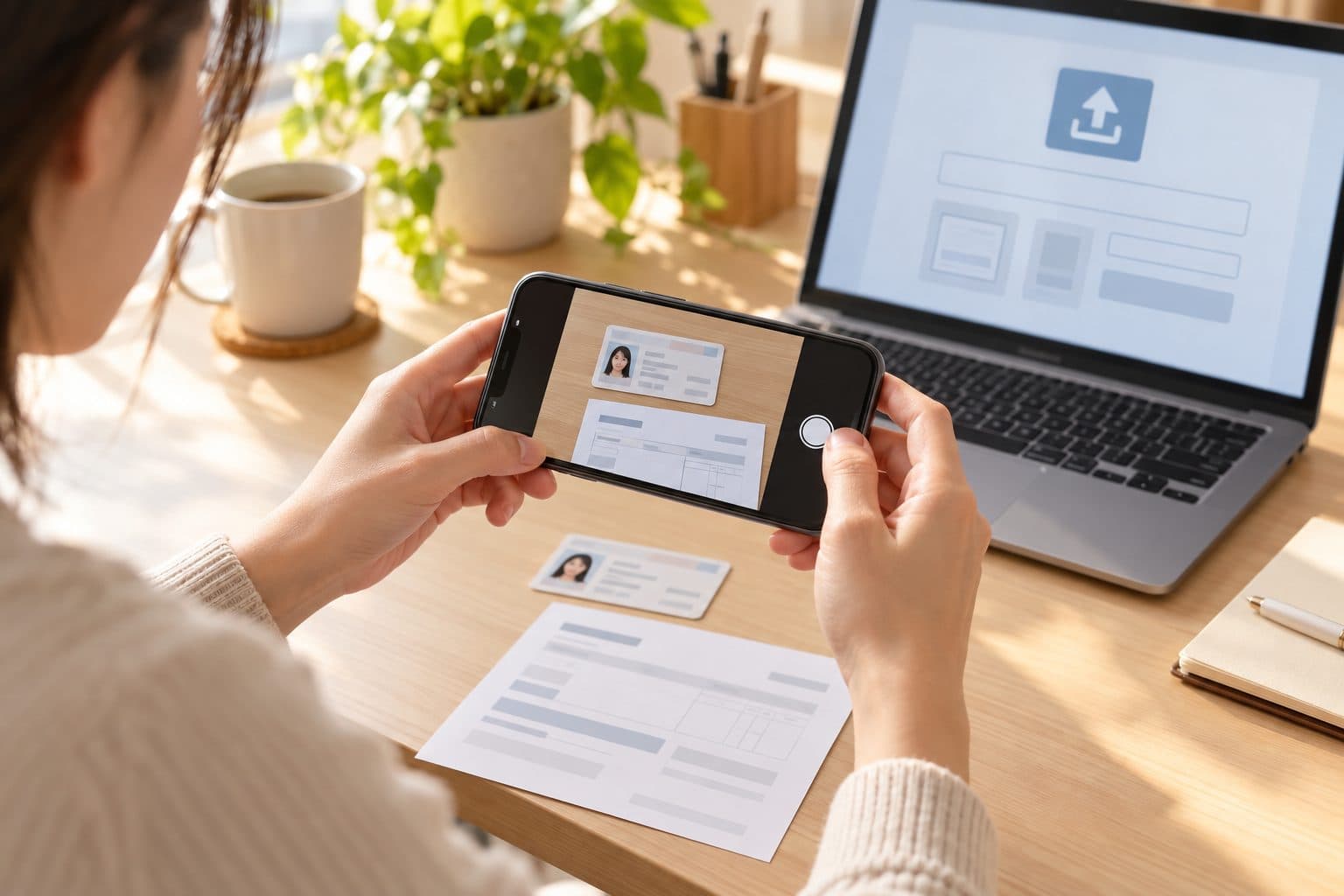
Uploading images taken with a smartphone is the most common method. Some brokers also ask for a selfie taken together with the document.
Why KYC gets rejected and how to fix it
Rejections are often caused by the condition of the image or a mismatch in the details rather than the document itself. If a reason is sent to you, read it first.
| Cause | Typical situation | Fix |
|---|---|---|
| Corners cut off | The edges of the document are outside the image | Place it on a flat surface and retake the photo so the whole document fits |
| Blurry image | Out of focus, glare, or taken in a dark place | Shoot in a bright place and avoid reflections |
| Expired document | You submitted a document past its expiry date | Prepare another document that is still valid |
| Name mismatch | The registered name differs from the document (for example, romanized spelling) | Make the registered details and the document match |
| Address not current | A change after moving is not reflected on the document | Prepare a document that shows your current address |
| Issue date too old | Too many days have passed since the proof of address was issued | Get a new document that meets the conditions |
When to submit and the risk of not submitting
We recommend finishing KYC before you deposit or start trading. If checks take time, you may not be ready when you want to withdraw.
Review time changes with the broker and how busy it is. Submit with time to spare.
- Some brokers do not accept withdrawals until KYC is complete
- You may be excluded from bonuses, or they may be cancelled
- Account features or trading may be restricted
- If you ignore a verification request, the account may be frozen
These are general points. How they are actually handled is set in each broker's terms.
How KYC relates to cashback
XB cashback is assumed to be credited to the account you traded in. If KYC is not complete, you cannot withdraw even after the cashback arrives.
Even if you open an account via XB, KYC is carried out by the broker. XB does not hold your documents.
Finish KYC before you receive cashback
If a problem with your documents is found at the withdrawal stage, receiving the money is delayed. It is safer to submit right after opening the account. Cashback amounts will be posted on each broker's page at launch.
For the withdrawal process itself, our article on receiving cashback is also a useful reference.
From preparation to approval
- 1
Check the required documents
On the broker's official page, confirm the accepted document types and conditions.
- 2
Prepare the documents
Check the expiry date, issue date, and the spelling of your name and address against your registered details.
- 3
Take the photos
Shoot in a bright place with all four corners visible. Avoid glare and blur.
- 4
Upload
Follow the instructions in your member area and submit each category of document.
- 5
Wait for the result
Wait for the approval notice. If rejected, read the reason, fix it and resubmit.
Go to each broker's official page from the list of supported brokers. Check the required documents on the official page.
Check the official pages of supported brokersFAQ
Q.What is KYC at an overseas FX broker?
It is the process where a broker confirms with documents that the account holder is who they say they are. Its purpose is to prevent money laundering and fraudulent use, and the documents and steps differ by broker.
Q.What documents are needed for overseas FX identity verification?
Generally, proof of identity and proof of address are required. Additional documents may also be requested. Accepted types and conditions differ by broker, so check the official page.
Q.What should I do if my verification is not approved?
Check the reason for rejection, then retake the images or replace the documents. The main causes are cut-off corners, blurry images, expired documents, and a name or address mismatch. Fix the problem and resubmit.
Q.Can I not withdraw until verification is complete?
Some brokers do not accept withdrawals. Handling differs by broker, so check the terms. To avoid trouble, we recommend finishing it before you start trading.
This article is for information purposes only and is not investment advice. Conditions may change, so please check each broker's official page for the latest information. Offshore FX and CFD trading carries a risk of losses exceeding your principal.